
Learning the colors is an essential step in children’s development, and it proves to be influential in communication later in life.
Colors influence mood and opinions, and they may even affect people’s perception. For example, blue is associated with trust and stability, yellow with happiness and energy, and green is a color associated with peace and calmness.
Colors and shapes are the first characteristics that help organize and categorize the world children experience. It may seem like a simple process, but it’s the foundation for more complex operations like recognizing letters and numbers, hence the importance of teaching this topic during early childhood. Of course, there is more to colors than just knowing their names. Learning the many shades, hues, and tints also helps enhance children’s creativity in a superb way.
They’re an aid in creating associations between colors and events, like dark green for Christmas, and light green for Spring, and also when learning about art and culture. Learning colors names in English is also a great way for children to start shaping their personalities, their likes, and dislikes, which will make them unique individuals in the future. To make learning the colors easier, let’s divide them into three categories: primary colors, secondary colors, and tertiary colors.
.
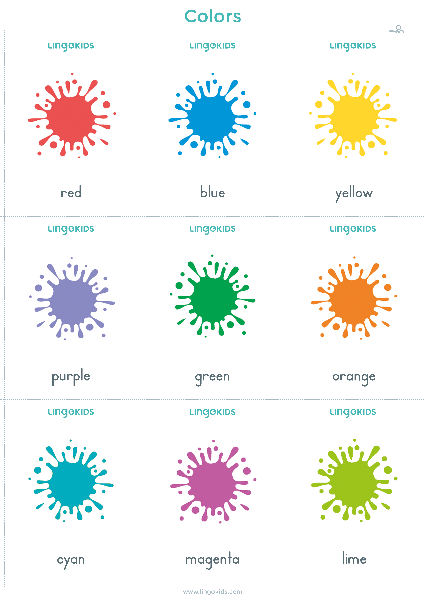
Primary Colors

red

yellow

blue
Secondary Colors
Secondary colors are the result of mixing two primary colors.

yellow + blue = green

red + yellow = orange

blue + red = purple
Tertiary Colors
Tertiary colors are the result of mixing one primary color with a secondary color. These mixes result in many different beautiful shades.

blue + green = teal

yellow + green = lime

red + green = brown
Other colors in English

navy

magenta

pink

turquoise

gold

silver

black

white
Let’s sing to learn the colors
Do you want to know how to pronounce the different colors in English?
Let’s sing the Rainbow Colors Song with Cowy!
Colors Printable Flashcards