


The release of Toy Story 5 has reignited one of the most heated debates in modern parenting: are tablets stealing childhood?
Since the film hit theaters, parents and commentators have been asking whether screens are the new villain in kids’ lives. It’s a conversation worth having, but the answer is more nuanced than a simple yes or no. What happens when technology replaces play instead of supporting it? That’s the real question. And it’s one Lingokids has been thinking about for years.
The Real Villain Isn’t Technology

© Lingokids
Screens are part of everyday life. Children use tablets to learn, communicate, create, and entertain themselves. The challenge isn’t whether kids should use technology; it’s how technology fits into a healthy childhood.
One thing experts agree on: not all screen time is created equal.
Active vs. Passive Screen Time
There’s a growing consensus among child development researchers that the type of screen experience matters as much as the amount of time spent on it.
Dr. Mona Amin, a pediatrician and member of the Lingokids Child Development Council, makes this distinction clear for parents navigating summer screen habits. In a recent interview on TV, she offered a practical tip that reframes the conversation entirely: instead of asking how long children spend on screens, parents can focus on how they engage with what they watch or play.
Her advice? Ask questions. After a screen session, try:
- “What happened?”
- “What did you learn?”
- “Who was your favorite character?”
Simple prompts that turn passive viewing into active conversation and reinforce learning.
The difference matters. Organizations such as the American Academy of Pediatrics (AAP), UNICEF, and the OECD encourage parents to look beyond screen time totals and consider whether digital experiences promote creativity, learning, problem-solving, and meaningful interaction:
Harvard University’s Center on the Developing Child similarly highlights that children learn best through active engagement and responsive interactions, which help build cognitive, social, and emotional skills (Experiences Build Brain Architecture).
This distinction helps explain why a child creating a story, learning a new language, or solving challenges on an educational app may have a very different experience from one passively consuming videos for hours. Research also suggests that the relationship between technology use and well-being is far more complex than simply counting screen hours.
Why Play Still Matters
None of this means technology can replace play. Quite the opposite.
Play is one of the most powerful learning tools children have. Through it, kids develop:
- Creativity
- Problem-solving skills
- Emotional regulation
- Social skills
- Communication abilities
- Confidence and independence
Whether children are playing with toys, inventing imaginary worlds, building forts, or creating stories, these experiences help them make sense of the world around them.
Technology can support these outcomes, but it can’t fully replace them.
Technology, Connection, and the Importance of a Safe Space
One of the biggest anxieties parents have about screens isn’t about learning at all; it’s about connection. When devices compete with face-to-face friendships, something important can get lost.
We live in an era of hyper-connectivity, and yet many children feel more isolated than ever. Social media, open platforms, and unfiltered online interactions expose kids to a world they’re not always ready for.
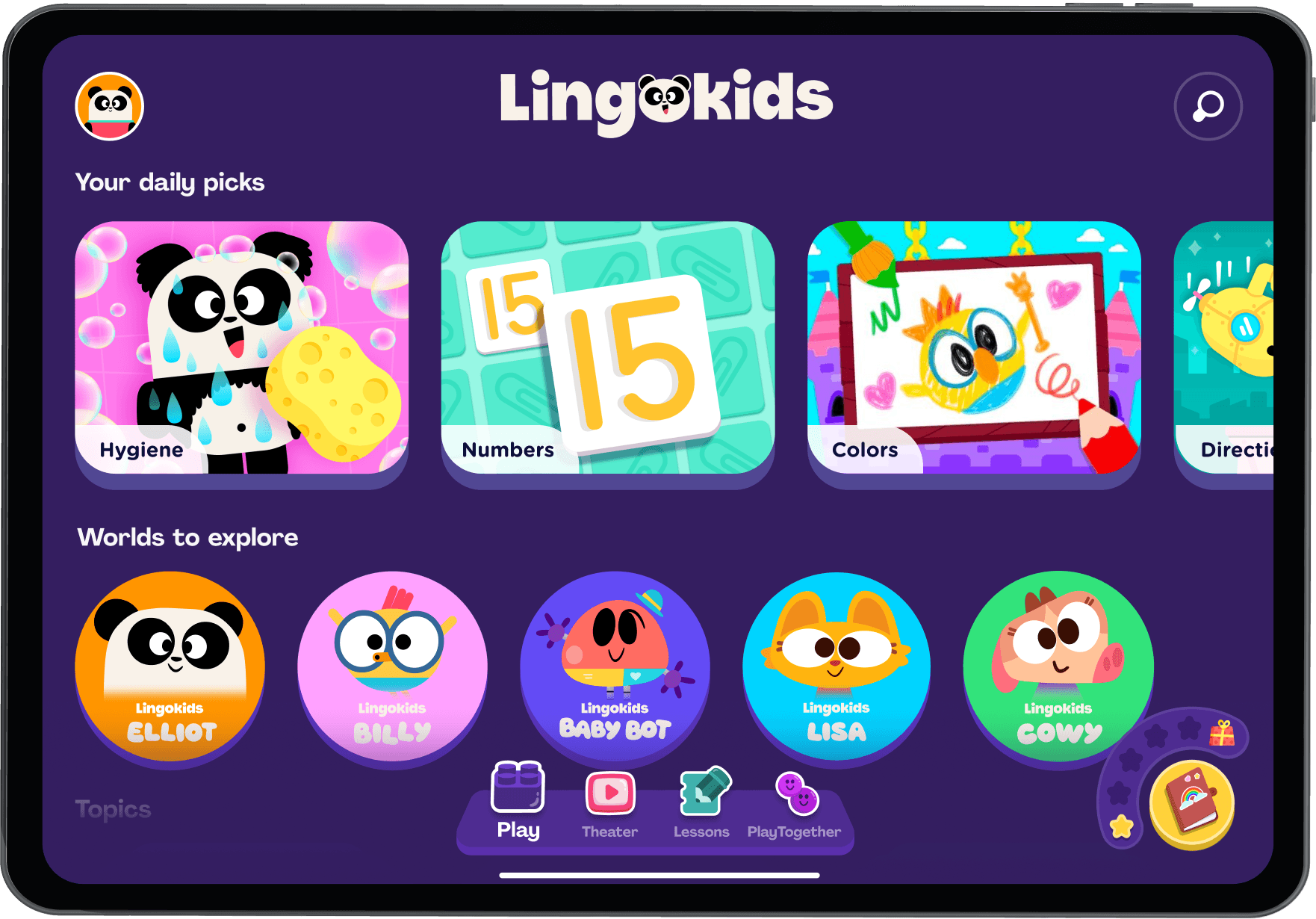
This is something Lingokids thinks about deeply. The Lingokids platform is designed as a safe, closed environment: children explore, learn, and play within a fully curated space, without exposure to outside users, social feeds, or unpredictable content. There’s no chat with strangers, no open internet, no algorithm pulling them toward the next viral video. Just meaningful, purposeful play.
Technology that connects children to the right experiences, in the right environment, isn’t a threat to childhood. It’s an extension of it.
The Best Childhoods Aren’t Digital or Physical. They’re Both.
The screen time debate often gets framed as an either/or. Toys or tablets. Real world or digital. But the research — and the experience of millions of families — tells a different story.
Children thrive when they have opportunities for both digital learning and real-world play. A tablet can introduce new ideas, spark curiosity, and support learning. A toy can inspire imagination, movement, and social interaction. Together, they complement each other rather than compete.
For parents, the goal isn’t to eliminate technology. It’s to create balance. That might mean:
- Choosing high-quality educational content
- Encouraging creativity instead of passive consumption
- Making time for independent play
- Participating in digital experiences together
- Creating screen-free moments throughout the day
So, Are Tablets the Villain?
No. But the question itself is worth asking — because it pushes parents to think more intentionally about how their children use technology, not just how much.
The brands, platforms, and tools that earn a place in childhood should support curiosity, creativity, and connection. They should open doors, not close them.
Tablets aren’t the enemy. Purposeless screen time is.
And that’s a problem worth solving, which is exactly what Lingokids was built to do.