


At Lingokids, great games don’t start with a finished idea; they start with curiosity, data, and experimentation.
Before a game reaches millions of families on the Lingokids App, it goes through an innovation process powered by real-time behavioral data, AI-driven analysis, and rapid prototyping. Prototyping is where these insights are transformed into playable mechanics. This is how Lingokids designs, tests, and evolves new games by combining AI-production process, live user data, and testing, along with a purposeful 2D design, long before a game is fully built.
Why Prototyping Matters at Lingokids
At Lingokids, games aren’t built around rewards or score alone. They’re built around learning.
Our core approach is entertainment and education as gameplay, meaning learning is embedded directly into the mechanics of the game, not added on afterward. Prototyping allows us to test this idea early, before setting a theme or defining learning objectives.
Prototypes exist to validate mechanics, not to deliver a finished experience. They are stripped-down, focused builds that answer very specific questions:
- Is this interaction intuitive for kids?
- Does the mechanic naturally support learning?
- Does it feel engaging within seconds?
Because of this focus, not every prototype becomes a game. In fact, only about 20–30% of prototypes move forward into full production. This selectivity ensures that only the strongest, most effective ideas reach families.
Prototypes help us answer one critical question early on: Is this fun, intuitive, and educational at the same time? So when we prototype, we focus on three key principles:
- Entertainment is the key
- Learning is the mechanic, not the reward
- Visual impact matters, especially for young learners
- Ideas should scale, so they can be adapted to different skills, ages, and even characters
From Idea to Prototype: Moving Fast on Purpose
Once an idea is selected, it moves quickly into prototyping. At Lingokids, a prototype typically takes five to seven days to build.
That speed isn’t accidental, and it’s not just about working fast. It’s enabled by the AI-powered production tools that the team uses to amplify the production process.
AI supports early-stage development by:
- Rapidly generating and structuring core gameplay code
- Creating early images, visual assets, animations, and UI drafts
- Assisting with music, sound effects, and voice-over production
By automating parts of the production process, reducing manual repetition, and accelerating experimentation, these AI-powered production system enables faster iteration and allow game developers to focus on what truly matters: refining the mechanics themselves.
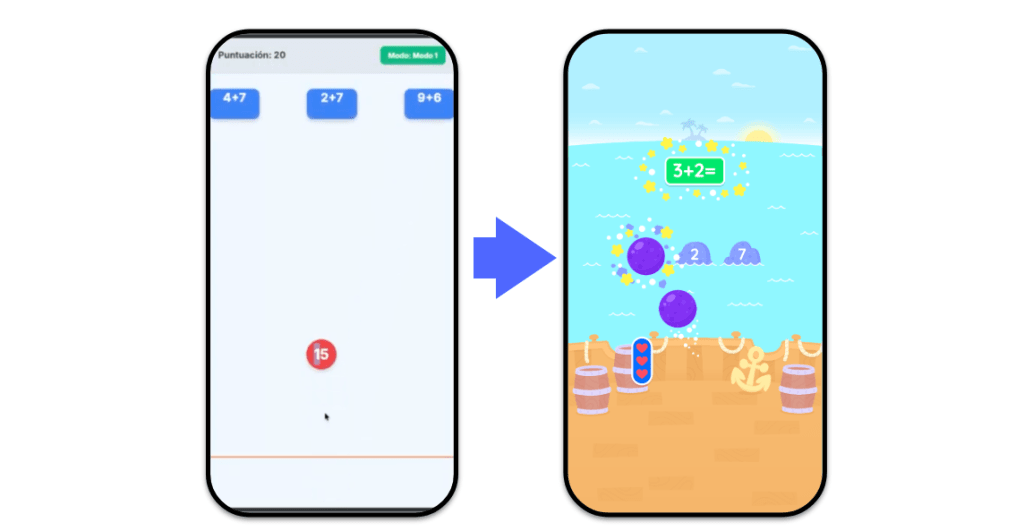
Prototypes are not polished games; they are focused experiments designed to validate one core idea: the game mechanic. At this stage, the goal is not final visuals or production quality, but understanding whether the mechanic works. Simple, playable builds are created to answer key questions:
- Does the mechanic feel intuitive?
- Is the difficulty appropriate for the target age?
- Is the learning objective naturally embedded in the gameplay?
- Does engagement happen within seconds?
Often, multiple prototype modes are explored to compare different approaches to the same concept before committing to a direction. Because this process is fast, evidence-driven, and supported by AI, Lingokids can explore many ideas quickly, knowing that only the strongest 20–30% will move forward into full production.
Innovation Starts With Real Kids, Not Assumptions
One of Lingokids’ biggest advantages is scale.
With millions of kids playing on the app every day, the team has access to real-time behavioral data that shows how children actually interact with learning experiences, not how adults assume they might.
AI and analytics help surface early insights such as:
- How long do kids stay engaged
- Where they struggle or succeed
- Which mechanics feel intuitive
- When motivation increases or drops
By leveraging AI and analytics, the team can detect patterns early and use those insights to inform prototypes often before traditional user testing would even begin.
But not everything is data. We actually perform early user testing.
Rather than guessing how kids might play, we observe how they actually interact with prototypes:
- Do they understand what to do without explanation?
- Are the gestures and mechanics intuitive?
- Do they stay engaged?
- Are learning objectives clear?
These early tests often lead to small but powerful changes, adjusting a gesture, simplifying a tutorial, or refining how feedback is shown on screen.
Iteration: Test, Learn, Improve
Prototyping is never a straight line. If the prototype moves towards becoming a game, it gets tested. After the first round of testing, games are refined and tested again. For example:
- Mechanics that felt confusing at first may be supported with clearer tutorials
- Reward phases are adjusted to keep motivation high
- Visual or animated clues are added to guide attention
In later tests, teams often see major improvements, kids play more confidently, understand goals faster, and enjoy the experience more.
This cycle of test → learn → improve continues until the game feels both fun and educational.
From Prototype to Final Game
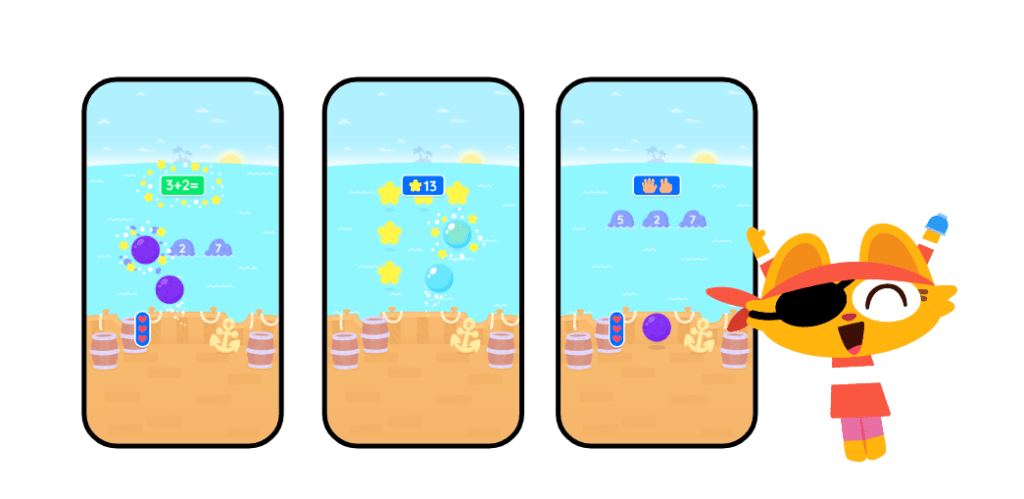
One key goal of prototyping is defining a game mechanic that can be scaled in the future.
Many Lingokids games are designed using modular systems, meaning the same core mechanics can support:
- Different learning subjects (like math or literacy)
- Multiple difficulty levels
- Future expansions or new content
By thinking modularly during prototyping, the team ensures that a single idea can grow into a whole family of learning experiences over time.
Once a prototype proves successful with kids, educators, and internal teams, it moves into full production.
This is a clear turning point in the process. Building the final game is not about polishing or “dressing up” the prototype. Instead, the prototype serves as proof that a mechanic works, and the real game is then built from the ground up.
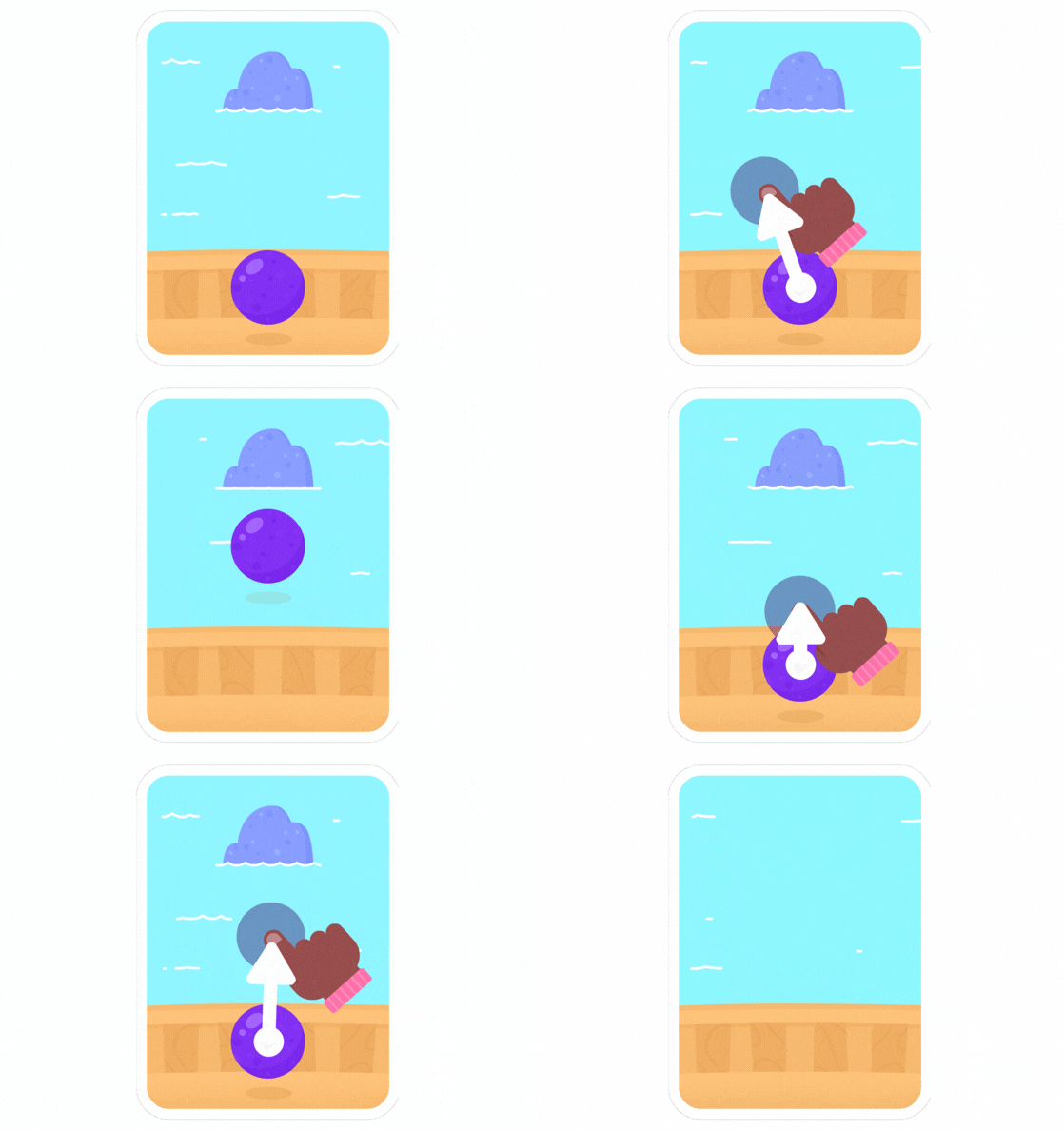
During production:
- The complete game architecture is developed in Unity, transforming the concept into a fully functional interactive experience.
- Core gameplay loops, round structures, and player journeys are strategically designed to maximize engagement and retention.
- Intuitive user interfaces and seamless interaction patterns are crafted to deliver a frictionless player experience.
- Characters, animations, environments, and visual systems are brought to life, shaping a rich and cohesive world.
- Text and voice-over are created and integrated to ensure clarity, immersion, and learning impact, always curated by educators.
- Sound design and responsive feedback systems enhance emotional connection and satisfaction.
- Rigorous quality assurance guarantees optimal performance, stability, and a safe, age-appropriate experience.
What started as a simple test becomes a polished game, ready to be enjoyed by families around the world.
Why This Process Matters
Prototyping is where Lingokids protects what matters most: the child’s experience.
By testing early, with entertainment and learning from real play, and iterating carefully, the team ensures every game is:
- Fun and intuitive
- Educational by design
- Built with kids’ real abilities and behaviors in mind
It’s a process that takes time, but it’s what allows Lingokids to create entertaining games kids genuinely love and from which they can also learn.
By combining:
- Fast prototyping cycles
- Early user testing
- AI-powered insights
- Real-time behavioral data
- Intentional 2D game design
Lingokids ensures innovation is both creative and disciplined. Ideas are tested quickly. Only the best survive. And every final game is built on evidence, not guesswork.
Want to See the Results for Yourself?

The best way to understand how Lingokids games are made… is to have your kids play them!
On the Lingokids App, kids can explore entertaining-learning games designed through this very prototyping process, tested with real children, refined by educators, and built to make learning feel like play.
Many of these games are available with Lingokids Plus, and families can try Plus for free to experience the full catalog together, including our newest game launches.
🎮🌟 Try Lingokids with your kids today and discover how thoughtful game design turns playtime into learning time.