Child development experts on the Lingokids team craft the activities, and the Lingokids Child Development Council, which includes a board-certified pediatrician, a clinical psychiatrist and a reading specialist, advises on the app. We test what we make with real kids, at home and in classrooms. Kids come for the fun and learn while they play.
Written by the Lingokids Team · Advised by the Lingokids Child Development Council · Updated 6 Nov 2026
Four experts in pediatrics, mental health, reading and educational media advise on how Lingokids is built for kids ages 2 to 8.
Board-certified pediatrician. Brings the pediatric view on young kids, screens and healthy digital habits.
Clinical psychiatrist. Advises Lingokids on mental health and neurodiversity.
Professor of education and reading specialist. Advises on early reading and how kids play with words.
Educational media innovator. Chairs the Lingokids Child Development Council.
Made by people who know kids, so the fun is the good kind.
Expert-made doesn’t mean one person signed off once. Here’s who has a hand in what your kid plays.
In-house child development experts craft the games, songs and shows, starting from how young kids actually play.
The Lingokids Child Development Council advises on the app, bringing pediatric, mental health, reading and educational media know-how to the table.
We test what we make with real kids, at home and in classrooms. That’s why the app runs on symbols, animation and voice-over instead of menus and text.
Lingokids Plus includes activities from Oxford University Press, right alongside the songs, games and shows kids already love.
Mostly, it looks like fun. The expert work is the part they never notice.
Dr. Mona, from our Child Development Council, on what healthy digital habits look like.
Hi, I am Dr. Mona Amin, a board-certified pediatrician in the United States, a mom of two, and I share information online and in my office to make parents feel more confident in their choices and their parenting journey.
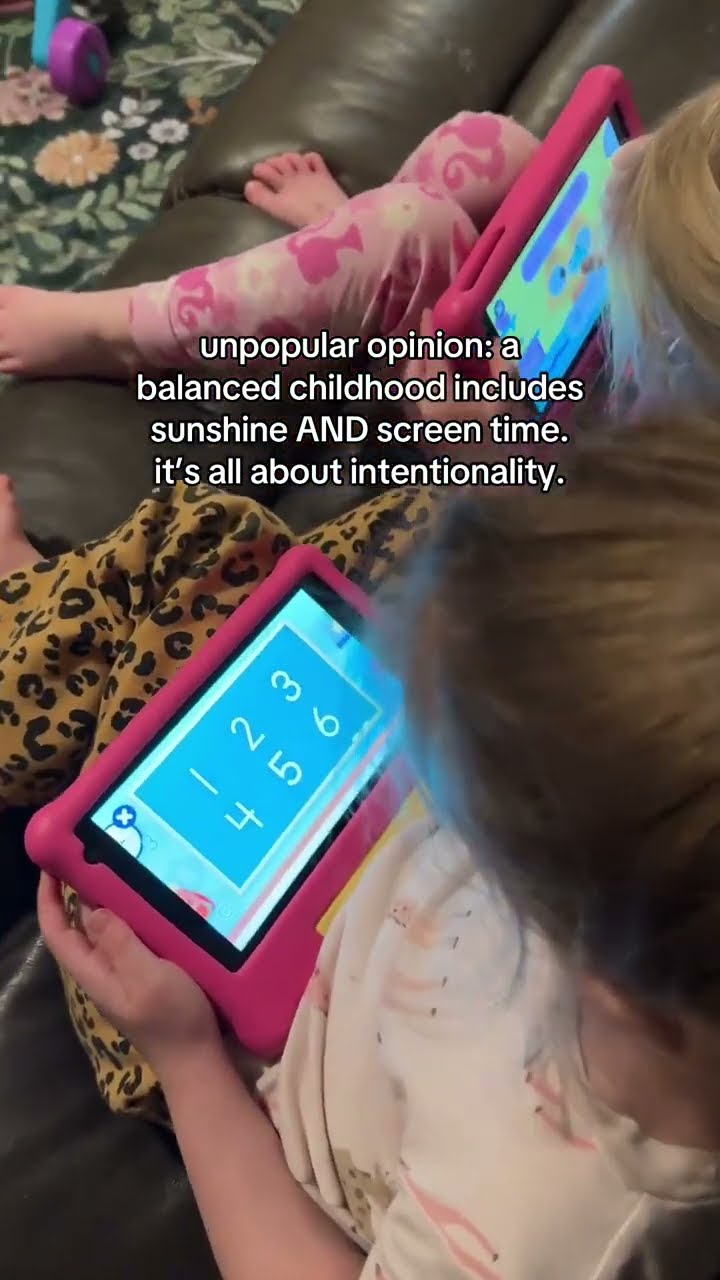
It seems children are naturally attracted to screens. Is that inherently bad? Excessive exposure to fast moving or overstimulating content has been linked to shorter attention spans and difficulty with impulse control. But the best thing here to do is setting clear limits and encouraging real life experiences and prioritizing sleep and meals so that children can build healthy habits around the screens.
So is a healthy use of screens possible and if so how? I do think that healthy use of screens is possible and it’s something that we as adults have to model as well. The biggest thing is emphasizing that healthy screen habits include quality content, co-engagement with the caregiver whenever possible and consistent boundaries. When screen time is balanced with rich offline experiences, children can benefit cognitively and emotionally.
Do they have valid reasons to feel guilty? There are valid reasons to feel guilty. I do think it’s important to re-evaluate that intentionality. Guilt isn’t useful if you’re using it intentionally. So many parents are navigating real challenges and may end up using screens more often than not. And I talk about this being in a season of change or maybe you’re using it in a different way. So maybe you have a new baby in the house and your older child wants more screen time. That’s not forever. So there are seasons. So when you look at screen use as seasons and not the standard, don’t feel bad if you’re going over recommendations because it is in the end about that big picture.
So does it mean that all parents should let go of the guilt? If you are using the screen with thought and intention and you are balancing it with other purposeful activities, I don’t think you need to have the guilt. Now when it comes to overuse of screens, I don’t want to put it as a frame of guilt because that can feel very shameful. I think it’s so important to be reflective of the use and that’s not only the child’s use of screens but the adults use of screen as well. When we parent from a place of guilt, we are not parenting from a place of authenticity because guilt can take the driver’s seat and then we don’t make decisions that are aligned with our values. So when I talk about guilt, I talk about let’s go back and think about what our family values are and our values towards screens are. So it’s not necessarily screen time rules. It’s a value system of, hey, I value being outdoors with my child. So, when you think about your value system, then you’re going to be less likely to feel guilty because you’re going to have, you know, the ability to say, okay, there’s going to be times and seasons where I may do a little bit less or a little bit more. So, I really encourage parents to tell themselves, look at the value system, because that’s the goal, right? I want my parents to show up more authentically, more like themselves. and guilt, shame, judgment, all of that can make us feel like we’re failing when we’re actually not.
Well, thank you so much for your answers. It’s been extremely helpful.
Here’s what parents and award juries say.
30+
awards, including Parent Tested Parent Approved, Kidscreen, Good Housekeeping, Mom’s Choice and the EdTech Awards.
190+
countries where families can download Lingokids.
200M+
downloads worldwide.
“My 2yo can’t get enough!”
“It helps my guilt about screen time because I feel she’s actually learning unlike other apps.” Emily, App Store review
Start free, or get every activity, including Oxford University Press, with Plus.
Basic is free forever. Plus is $5.99/mo billed yearly, with a free week.
US prices in USD, from the live Lingokids paywall. Prices can vary by country and app store.
Recognized globally for safety and innovation.
Mom’s Choice Awards ✦ Parent Tested Parent Approved ✦ EdTech Awards ✦ Kidscreen ✦ Good Housekeeping
The Lingokids Child Development Council is chaired by Scott Traylor, an educational media innovator. Its other members are Dr. Mona, MD, a board-certified pediatrician; Diana Barrett, a clinical psychiatrist who advises on mental health and neurodiversity; and Sharon Walpole, PhD, a professor of education and reading specialist.
Entertainment first, with learning inside. Lingokids is an entertainment app for kids ages 2 to 8, with 4,000+ games, songs, videos and shows built to be fun. In-house child development experts build skills into that play, and with Lingokids Plus, parents can see top skills and subjects in the Progress Center.
Lingokids runs efficacy studies with kids at home and in classrooms, checking literacy, math and social-emotional skills before and after, and publishes the findings on its research page. The product team also tests new features with real kids in schools.
Yes. Lingokids builds English activities from Oxford University Press courses. With Lingokids Plus, kids get OUP activities in the app, and families who buy certain OUP books (like Mouse and Me or Little Blue Dot) can unlock matching activities with the code inside (the code doesn’t include Plus).