
The easiest way to help kids understand emotions is to make feelings fun instead of a lesson. Name emotions out loud during play, sing silly feeling songs, make faces in a mirror, and let games do the talking. When big feelings feel playful, little kids lean in instead of melting down or shutting the conversation down.
If you have ever watched a two-year-old go from giggles to a full-body sob in about four seconds, you already know: little kids feel everything, big and loud, all at once. They just do not have the words yet. The good news is that helping them figure it out does not require a chart on the fridge or a “let’s have a serious talk” moment. It happens in the middle of play, in the car, at bath time, and in the goofy faces you pull at breakfast.
Here is how to make it fun.
How do you help a toddler name their feelings?
You help a toddler name their feelings by putting words to what they are already showing you, in the moment, without making it a big deal. Toddlers cannot manage a feeling they cannot name, so your job is mostly narration. When your little one stomps off, you might say, “Whoa, you seem really frustrated that the tower fell.” That is it. You just handed them a word for the storm happening inside.
A few playful ways to do it:
- Play “face detective.” Make an exaggerated face and ask, “What feeling am I?” Then let them try to stump you. Silly faces make feelings low-stakes and hilarious.
- Narrate characters. During shows, books, or games, casually point out, “He looks nervous, huh?” It is easier for kids to talk about a character’s big feelings than their own.
- Use a mirror. Pull happy, surprised, and grumpy faces together. Toddlers love watching their own expressions, and they are secretly learning that faces and feelings connect.
You are not teaching a curriculum. You are just naming the weather as it passes through.
What games help kids with big emotions?
The best games to help kids with feelings turn emotions into something to spot, sort, and giggle about rather than something to fix. Play gives kids a safe distance. A dinosaur can be “so mad it stomps,” and suddenly your child is exploring anger without being in the middle of it.
Great off-screen options:
- Feelings freeze dance. Play music, then call out a feeling (“Dance happy! Now dance sleepy!”). Kids act it out with their whole bodies, which is how little ones process emotion best.
- Emotion charades. Take turns acting out a feeling while everyone guesses. Toddlers can do simple ones like happy, sad, and surprised.
- Stuffed-animal check-ins. Ask, “How is Teddy feeling today?” Kids often tell you how they feel through their toys.
On the app side, this is where a kids entertainment app can quietly help without turning into a lesson. Lingokids has a playful set of emotion activities that kids actually ask to replay. In Billy’s Emotions Game, kids help a character figure out how he feels, which is basically emotion charades with a buddy. Photobooth Emotions lets them pull silly faces and match them to feelings (the same mirror trick, now with laughs on repeat). And Memory Cards: Feelings turns matching happy, silly, and grumpy faces into a game they think is just about winning. None of it feels like homework, which is exactly the point.
How do you calm a child who is having a meltdown?
You calm a child mid-meltdown by helping their body settle first, then their feelings, because you cannot reason with a flooded toddler. In the moment, big words do not land. Slow, silly, physical stuff does.
Try these:
- Breathe like something fun. “Smell the flower, blow out the candle.” Or blow imaginary bubbles together. Slow breathing calms the nervous system, and pretending makes a stubborn toddler actually do it.
- Get low and quiet. Drop to their eye level, lower your voice, and keep it simple: “I am right here.”
- Offer a feelings exit ramp. A cozy corner with a pillow and a favorite stuffed animal gives kids a place to reset that is not a punishment.
For the breathing piece, having a go-to routine helps. Lingokids includes a Mindful Breathing activity that turns slow breaths into a calm, playful moment, which is handy when your own patience tank is running low. Practice it when everyone is happy, and it becomes a tool your child recognizes when things get rough.
Can songs really help kids with feelings?
Yes, songs help kids with feelings because rhythm, repetition, and melody make emotion words stick far better than a conversation ever could. Think about how fast your toddler memorized a song about the wheels on a bus, then imagine that same brain power aimed at “sometimes I feel happy, sometimes I feel sad, and both are okay.”
Music also regulates mood in real time. A calm song can lower the temperature in a cranky car ride, and a goofy one can shake off a bad mood in thirty seconds flat. If you want a starting point, we rounded up our favorite kids songs that families play on repeat, and plenty of them sneak feelings right into the fun.
Try singing a feelings song during a predictable rough patch, like the morning rush or the bedtime wind-down. The routine plus the melody does a lot of quiet heavy lifting.
How much screen time is okay for this?
A little screen time is okay when it is playful, ad-free, and something you feel good handing over. The goal is not to outsource feelings to a tablet. It is to have a few genuinely fun, safe activities in your back pocket for the moments when you need five minutes to make dinner or catch your breath.
That is really where a trusted app earns its spot. Instead of a YouTube rabbit hole with unpredictable ads, you get a fenced playground where “playing games” and “spotting feelings” happen to overlap. If you are weighing your options, here is a look at how Lingokids compares, and a broader roundup of entertainment apps for kids worth knowing about.
FAQ
At what age can kids start understanding emotions? Kids start recognizing basic emotions like happy and sad as early as age two, and they get better at naming and managing them through the preschool years. Every child moves at their own pace, so keep it playful and pressure-free.
How do I teach my child about feelings without it feeling like a lecture? Fold it into play instead of scheduling a talk. Name feelings as they happen, play silly face games, sing feeling songs, and let characters model big emotions. Kids absorb far more when they are laughing than when they are being taught.
What are the best games to help kids with feelings? Freeze dance, emotion charades, stuffed-animal check-ins, and mirror face games are simple winners. Playful app activities like emotion matching games and photo-booth face games add variety when you need an easy, mess-free option.
Do feelings songs actually work for toddlers? Yes. Melody and repetition help emotion words stick, and music can shift a toddler’s mood in seconds. A calm song at bedtime or a goofy one after a meltdown are two of the easiest tools you have.
Is it normal for my toddler to have such big reactions? Completely normal. Little kids feel intensely and have not built the skills to manage it yet. Your calm narration, plus lots of playful practice, is exactly how those skills grow.
Give big feelings a fun place to land
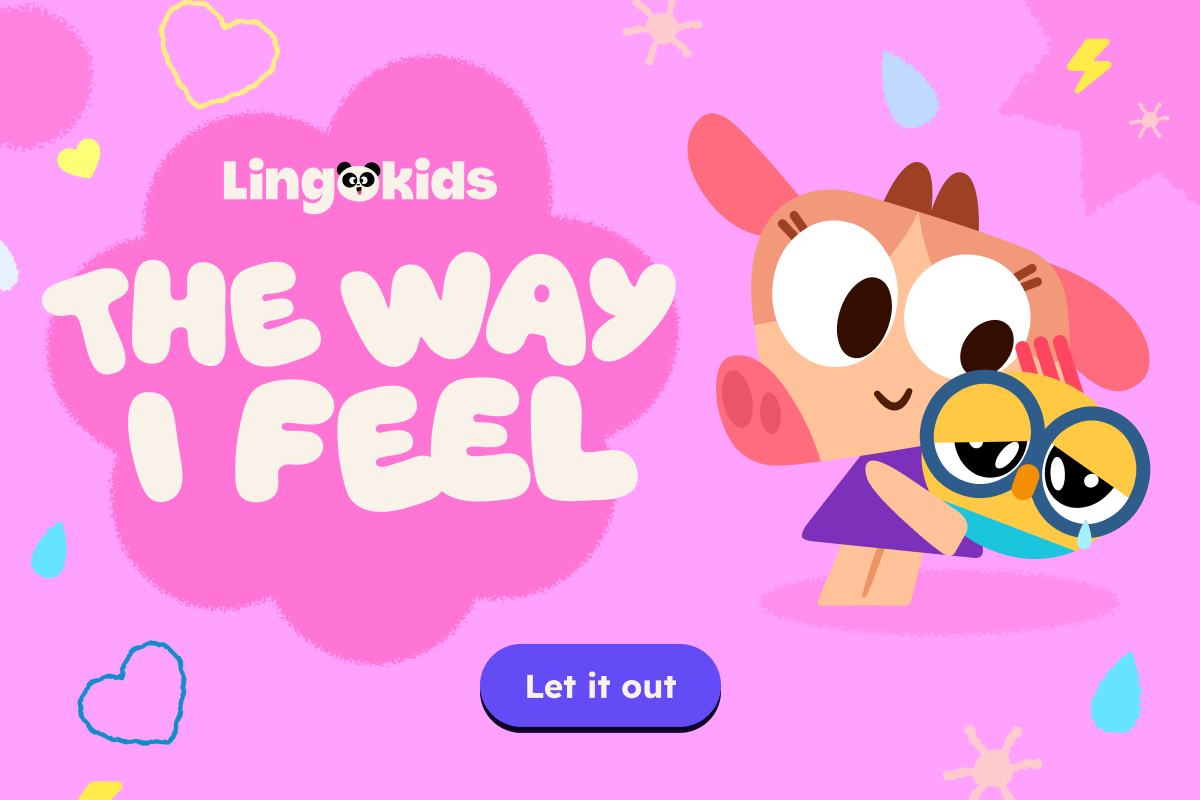
Helping little ones understand their emotions does not have to be one more thing on your to-do list. It can be a silly face, a favorite song, a slow breath, or a quick game while you make lunch. Our in-app collection The Way I Feel turns big feelings into playful adventures kids love, with games, songs, and characters who feel it all right alongside them.
Ready for a few giggles and a little more calm? Explore the emotion games and songs in the Lingokids app and let the fun do the teaching.