



Can Entertainment Apps Actually Teach Real Skills?
For many parents, screen time feels like a compromise.
It entertains. It keeps kids busy. But does it truly help them grow? The answer depends on the design behind the app.
Some entertainment apps are built purely to capture attention. Others are thoughtfully designed so that real skills develop naturally during play.
The best entertainment apps that teach skills don’t look like digital worksheets. They look like games, songs, stories, and interactive adventures, but beneath the fun, meaningful development is happening.
Understanding that difference changes everything!
What Skill-Building Looks Like Inside Modern Kids’ Apps
Strong kids’ platforms don’t separate fun and growth. Instead, they layer them together.
Rather than obvious lessons, you’ll often see:
- Story-driven problem solving
- Music that reinforces language patterns
- Games that build logic and memory
- Role-play scenarios that support emotional awareness
- Creative challenges that encourage experimentation
Children don’t feel like they’re being taught. They feel like they’re playing. That’s when screen time becomes purposeful.
Real Skills Entertainment Apps Can Support
Language and Communication
Songs, storytelling, and interactive prompts can naturally strengthen vocabulary, listening skills, and expressive language. When children respond, repeat, and engage instead of just watching, communication skills grow more organically.
Early Math and Logical Thinking
Counting games, patterns, sequencing challenges, and puzzles help children build foundational reasoning skills. When math concepts are embedded in play, they feel rewarding rather than intimidating.
Focus and Self-Regulation
Interactive apps that require participation -instead of endless passive viewing- encourage children to complete short challenges, follow instructions, and build attention stamina. These are skills that transfer well beyond screen time.
Social-Emotional Awareness
Character-driven stories and guided scenarios can help children explore empathy, cooperation, and emotional recognition. Entertainment becomes a safe space to practice understanding feelings and navigating relationships.
Creativity and Curiosity
Apps that include drawing tools, music creation, storytelling prompts, or imaginative challenges encourage children to create rather than simply consume. Creative exploration builds confidence and flexible thinking.
Passive Entertainment vs Purposeful Play
Not all digital entertainment works the same way.
Some platforms are structured to maximize watch time. They rely on autoplay, endless scrolling, and algorithm-driven feeds.
Others are structured around guided sessions, interactive challenges, and age-appropriate progression.
That structural difference shapes how children experience screen time.
Parents searching for entertainment apps that teach skills are often really searching for balance, fun that feels enriching instead of empty.
What to Look for in Entertainment Apps That Teach Skills
When evaluating options, consider:
- Is the experience interactive or primarily video-based?
- Does the app rely on autoplay and recommendation algorithms?
- Are ads interrupting the experience?
- Is the content organized by developmental stage?
- Does it encourage active participation?
Apps designed with intention tend to create healthier digital habits and more meaningful engagement.
Screen Time With Purpose
Children don’t divide their world into “learning” and “fun.” If something feels playful, they engage. If it feels like schoolwork, they disengage.
The strongest entertainment apps understand this. They design:
- Play first
- Skills underneath
- Structure behind the scenes
That’s what transforms screen time from distraction into something more thoughtful.
How Lingokids Blends Entertainment With Real-World Skills
Lingokids is built around this philosophy: play first, growth naturally follows.
Inside the app, children explore interactive games, songs, cartoons, and creative activities. But each experience is intentionally designed to support communication, logical thinking, emotional awareness, and creativity.
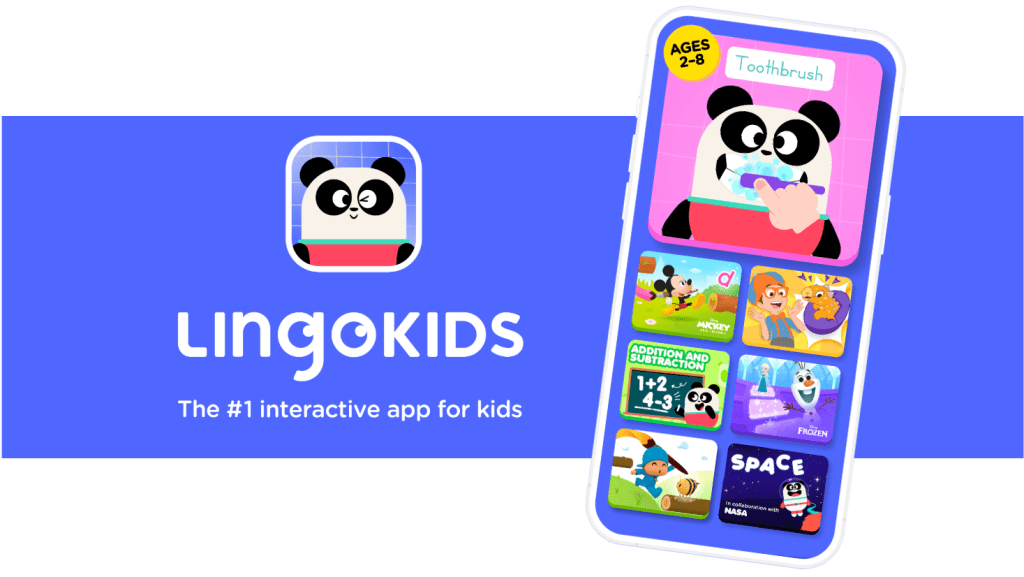
It’s entertainment created specifically for children ages two to eight, in a fully ad-free, curated environment.
When apps are built for kids rather than adapted from adult platforms, fun and development can work together seamlessly.
Entertainment doesn’t have to be empty.
With the right design, screen time can mean playing, creating, solving, exploring, and building real skills, all while kids are simply having fun.
The goal isn’t to eliminate entertainment. It’s to choose entertainment apps that teach skills naturally, so children stay engaged, and parents feel confident about the time spent.